
Hip pain can make everyday activities like walking, sitting, or sleeping difficult. When conservative treatments no longer provide relief, Suburban Orthopaedics’ hip pain specialists diagnose the underlying cause of hip discomfort, whether it stems from arthritis, bursitis, fractures, labral tears, or another condition.
Through imaging, physical examination, and a detailed medical history, our team determines whether surgery is appropriate, and which type of hip replacement best fits your needs.
What Are Total and Partial Hip Replacements?
The hip is a ball-and-socket joint formed by the femoral head (ball) and the acetabulum (socket). Hip replacement surgery involves removing damaged portions of this joint and replacing them with artificial components designed to reduce pain and improve function.
The extent of surgery and implants differs:
- Total Hip Replacement (Total Hip Arthroplasty)
- Both the upper thigh bone (femoral head) and the hip socket are replaced with prosthetic parts.
- This is the most common type of hip replacement surgery.
- It is typically recommended when arthritis or joint damage affects the entire hip.
- Partial Hip Replacement (Hemiarthroplasty)
- Only the femoral head (ball) is replaced, leaving the natural socket.
- This approach is used less often.
- Generally reserved for specific cases, such as certain hip fractures where the socket remains healthy.
Both procedures are designed to relieve pain and improve mobility, but the extent of joint damage and the patient’s overall health determine which option is most appropriate.
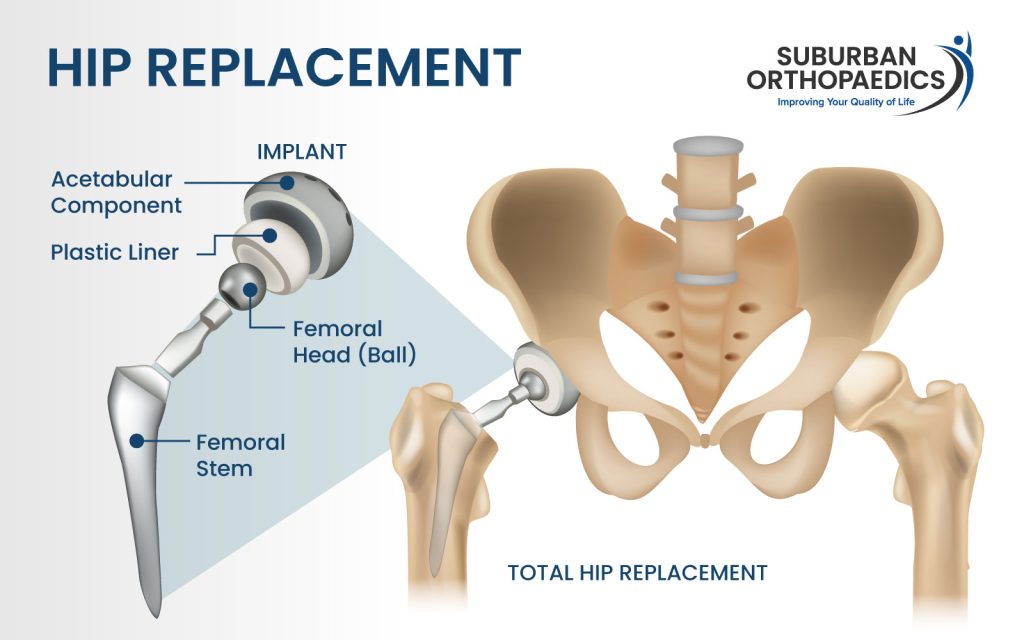
Key Differences Between Total and Partial Hip Replacement
Cause of Hip Pain
When arthritis has worn down cartilage on both the ball and socket, total hip replacement is usually recommended because it addresses all damaged areas of the joint. If hip pain is caused by a fracture and the socket remains healthy, a partial hip replacement may be sufficient.
Health and Activity Level
Total hip replacement often provides the best long-term outcomes for patients who are active and otherwise healthy. Partial hip replacement may be recommended for patients with additional health concerns or limited mobility, where a shorter surgery and quicker initial recovery are priorities.
Surgical Scope, Recovery, and Longevity
Partial hip replacement is generally a smaller operation, while total hip replacement involves resurfacing both sides of the joint. Both procedures typically require a short hospital stay and structured rehabilitation. Many patients begin walking with assistance a few weeks after surgery, with continued improvement over several months. Modern hip implants are designed to last for decades, though younger or more active patients may place greater long-term demands on the joint, which is an important factor in procedure selection.
Recovery and Results
Recovery after hip replacement is a gradual process, and rehabilitation plays a key role in long-term success. While some activity limitations are common early on, most patients begin moving shortly after surgery.
Early Recovery
Many patients can bear weight on the operated leg soon after surgery, often with the help of a walker or cane. Physical therapy usually begins within a day or two and focuses on restoring strength, improving range of motion, and supporting safe movement.
Progress Over Time
By 6 to 12 weeks, most patients have regained significant mobility and are walking more comfortably. Many people experience meaningful improvement within the first few months and continue to progress over the course of the first year.
Low-impact activities such as walking, swimming, golfing, or cycling are commonly encouraged once healing progresses. High-impact sports, including running or jumping, are generally discouraged to protect the artificial joint and extend implant life.
Patients who undergo partial hip replacement may be able to resume walking slightly sooner than those who have a total hip replacement, particularly after a fracture.
Why Should I Have a Hip Replacement?
Hip replacement surgery is a highly effective option for reducing pain and improving mobility.
Benefits of Hip Replacement
For most patients, the benefits outweigh the risks. Both total and partial hip replacement procedures are highly effective at relieving chronic hip pain, improving joint function, and restoring independence. Many patients can return to daily activities more comfortably and enjoy a more active lifestyle after recovery.
Still, as with any surgery, there are risks to consider. Your Suburban Orthopedics’ specialist will walk through the potential risks and help to figure out the best course of action.
Frequently Asked Questions
How do I know when it’s time to consider hip replacement surgery?
Hip replacement may be recommended when hip pain persists despite nonsurgical treatments and begins to interfere with walking, sleep, or daily activities. A consultation with an orthopedic specialist can help determine whether surgery is appropriate or if other options are still available.
Is hip replacement surgery safe?
Hip replacement is one of the most performed and successful orthopedic procedures. While all surgery carries some risk, complications such as infection or blood clots are uncommon. Your care team takes proactive steps before, during, and after surgery to minimize risks and support safe recovery.
Will I need physical therapy after hip replacement?
Yes. Physical therapy is an important part of recovery after both total and partial hip replacement. Therapy helps restore strength, improve range of motion, and support a safe return to everyday movement. Your specialist will tailor a rehabilitation plan based on your procedure and progress.
How long will a hip replacement last?
Modern hip implants are designed to be durable and often last 20 years or longer. Many patients never require another surgery. Implant longevity depends on factors such as activity level, overall health, and adherence to post-surgical guidance.
Are there alternatives to hip replacement surgery?
In some cases, hip pain can be managed with nonsurgical treatments such as physical therapy, injections, or activity modification. Suburban Orthopaedics specialists evaluate each patient individually and recommend surgery only when conservative options are no longer effective.
Can I delay hip replacement if my symptoms are manageable?
Yes. If hip pain is present but still manageable, surgery may not be immediately necessary. However, worsening pain or reduced mobility over time may indicate that it’s time to revisit your options with a specialist.
A Personalized Decision at Suburban Orthopaedics
If hip pain is limiting your daily activities or quality of life, a consultation with a Suburban Orthopaedics specialist can help determine whether hip replacement surgery is right for you.
Schedule an appointment to discuss your symptoms and take the next step toward lasting pain relief and improved mobility.