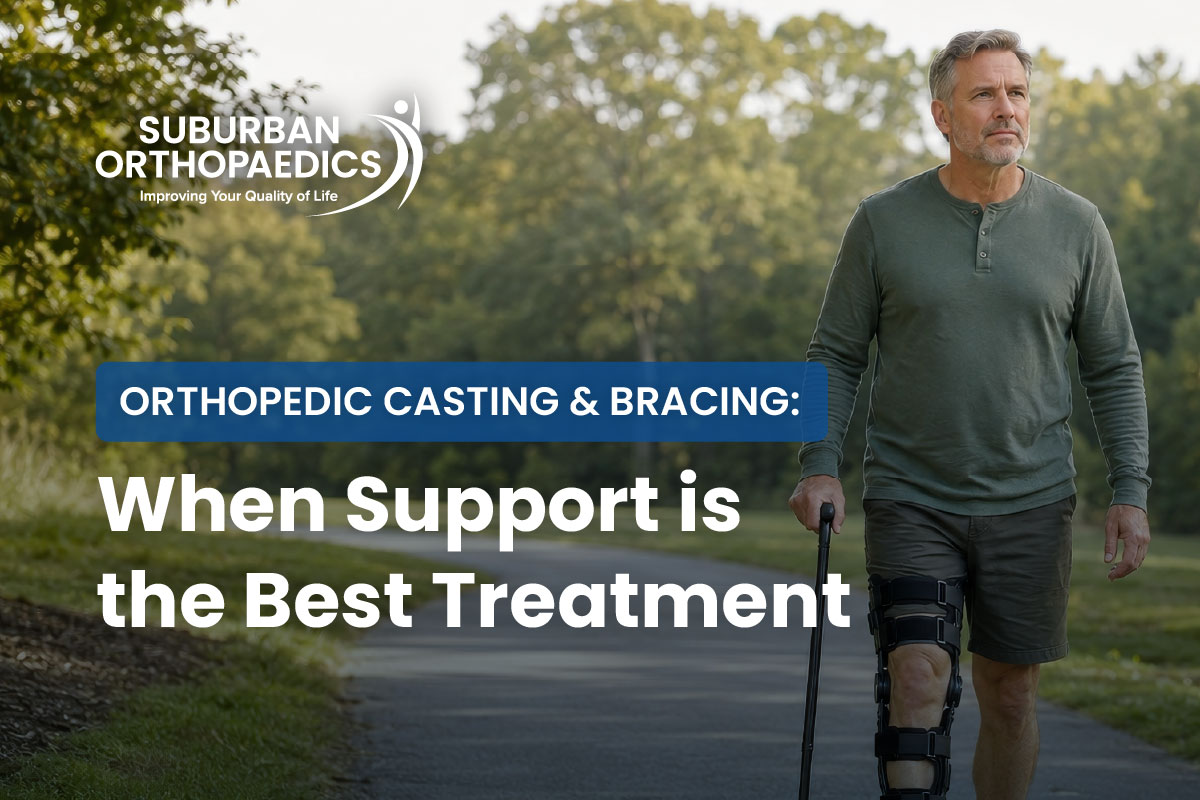
Helping an injury heal sometimes means limiting how much the affected area moves. A broken bone may need to stay in position, while an injured joint may need extra support as you return to activity. Orthopedic casting and bracing help provide that protection, with different options depending on the condition being treated.
At Suburban Orthopaedics, our casting and bracing services are part of a treatment plan built around your needs. Understanding how these supports work can help you feel more comfortable with your care and know what to expect during recovery.
The Role of Orthopedic Casting and Bracing
Casts and braces help control movement and provide stability, but they serve different purposes. For some injuries, holding the area still is an important part of healing. For other conditions, support may help reduce discomfort while allowing you to continue certain activities.
Your orthopedic specialist will review your symptoms and examine the affected area to determine how much support it needs. Imaging, such as X-rays when a fracture is suspected, may help confirm the diagnosis and guide treatment. Based on those findings, your specialist will explain whether a cast, splint, or brace is appropriate and how it fits into your care.
Casts and Splints
A cast forms a firm shell around an injured area, helping keep a broken bone in position while it heals. A splint provides similar protection, but its rigid portion does not completely surround the limb. This leaves more room for swelling, which is why a splint may be used first and replaced with a cast later.
Braces
Braces offer different levels of support, from limiting joint movement to allowing controlled motion during recovery. Braces offer different levels of support, from limiting joint movement to allowing controlled motion during recovery. The type of brace and wearing schedule depends on your condition and how much stability the joint needs.
Conditions That May Benefit from Added Support
Casting and bracing can be used for several orthopedic conditions. The diagnosis and severity of the problem help determine whether support alone is appropriate or whether it should be combined with other treatments.
Fractures
Some broken bones can heal without surgery when they are properly positioned and stable enough to be treated with a cast or boot. Follow-up appointments allow your provider to check that healing is progressing and that the bone remains in an acceptable position.
Sprains and Ligament Injuries
A sprain occurs when a ligament, the tissue connecting bones at a joint, is stretched or torn. Bracing may help protect the joint while the ligament heals, with more substantial support sometimes needed for a more severe injury. As recovery progresses, physical therapy may help restore strength, balance, and movement. The amount of support can then change as the joint becomes better able to handle activity.
Arthritis and Joint Discomfort
Bracing may also help manage symptoms of certain ongoing joint conditions. For some patients with knee arthritis, a brace can provide stability or shift pressure away from the affected part of the joint. Although a brace does not reverse arthritis, it may make activity more comfortable when used alongside exercise, physical therapy, or other recommended care.
Frequently Asked Questions About Casting and Bracing
How long will I need to wear a cast or brace?
There is no single timeline for every condition. Your provider will monitor your progress and explain when the support can be changed or discontinued. Improving symptoms are encouraging, but they do not always mean healing is complete.
Can I remove my brace to sleep or shower?
Your specialist will explain when to wear your brace and whether it can be removed for sleeping, bathing, or exercises. Follow these instructions throughout treatment, since your wearing schedule will depend on your injury and the type of brace.
Can I stay active during treatment?
You may be able to continue some activities with adjustments. Your provider will explain which movements are safe and whether you can put weight on the injured area. A cast or brace does not make every activity safe during recovery.
Casting and Bracing at Suburban Orthopaedics
The right support starts with understanding your condition. At Suburban Orthopaedics, our team helps determine whether casting or bracing may benefit you and provides guidance throughout treatment.
Schedule an appointment to discuss your symptoms and explore a treatment plan that supports healing and more comfortable movement.